
Most meetings rely on one basic tool: conversation.
We put a group of people in a room, give them something to discuss, and start talking. But if we want to understand how to run productive meetings, we need to look more closely at what we’re actually asking that conversation to accomplish.
We explain things. We ask questions. We suggest ideas. We challenge them. We agree and disagree. We compare, negotiate, persuade, clarify, debate and try to reach a conclusion. Sometimes we’re sharing information. Sometimes we’re looking for input. Sometimes we’re trying to solve a problem or make a decision. Often, we’re doing several of those things at once.
That was the starting point for a workshop I recently delivered at the Richardson Chamber of Commerce September Luncheon, called Why Your Meetings Are Broken and How to Fix Them.
I didn’t want people thinking about meetings as an abstract problem, so everyone started the session by choosing one real meeting they wanted to improve in the next 30 days. It might have been a board meeting, a committee meeting, a regular team meeting or a project meeting. Whatever they chose, that meeting became their reference point for the rest of the session.
The aim was simple: understand why so many meetings get stuck, and explore practical ways to run more effective meetings that use people’s time well, involve more people in the thinking, and lead to clearer decisions and next steps.
The Problem With Just Talking
If you want to know how to improve meetings, start by looking at how much of the meeting depends on one continuous conversation.
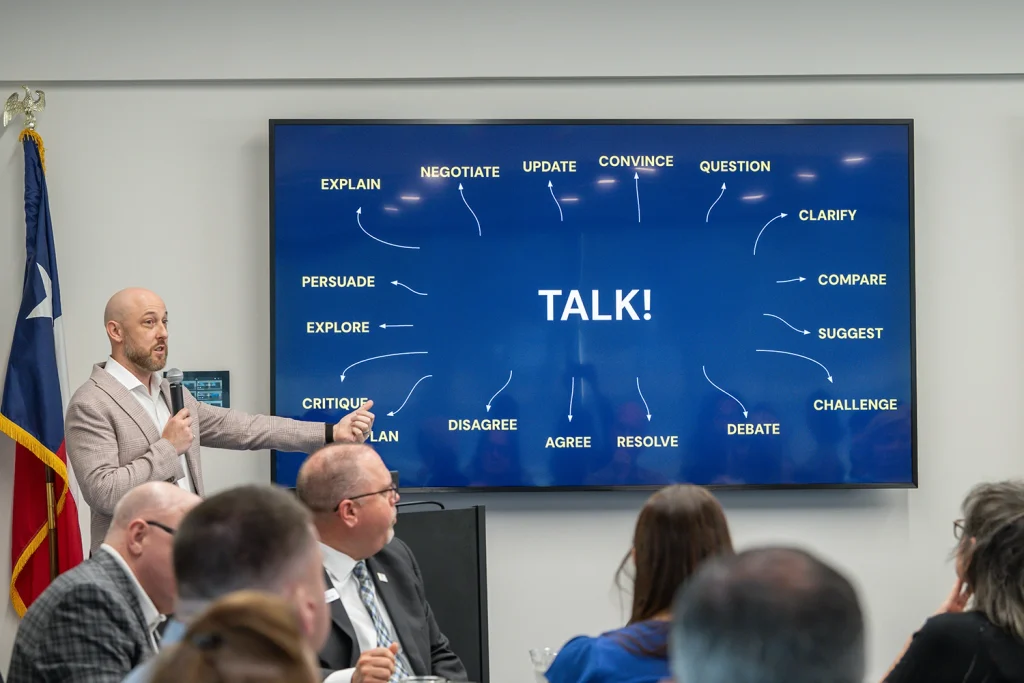
During the workshop, I asked the room to name one thing we always do in meetings. The answer was obvious: we talk.
Talking itself isn’t the problem. The problem is that we use talking to do almost everything. We explain, question, suggest, challenge, clarify, explore, compare, debate, negotiate, agree, disagree and try to resolve.
And while all of that is happening, the conversation is being influenced by the people in it.
The first idea can set the direction. The last comment can stick in our minds. The loudest voice can get more attention, as can the most senior person, the person who speaks for the longest, or simply the most convincing speaker. We can favor ideas we’ve heard before, views we already agree with, and contributions from people we trust or perceive as experts. Sometimes people hold back and say the safest thing rather than what they really think.
This is one reason better meetings need more than a good agenda. They need a meeting structure that considers how people will contribute, how ideas will be collected, and how the group will move from discussion to an outcome.
If you want more productive meetings, don’t just ask, What do we need to talk about?
Ask, What do we need the people in this room to do?
That small change in thinking can completely change how you structure a meeting.
A Better Meeting Structure Starts With Knowing What You Need From the Group
Once you stop treating a meeting as one long conversation, you can start thinking more deliberately about its structure.
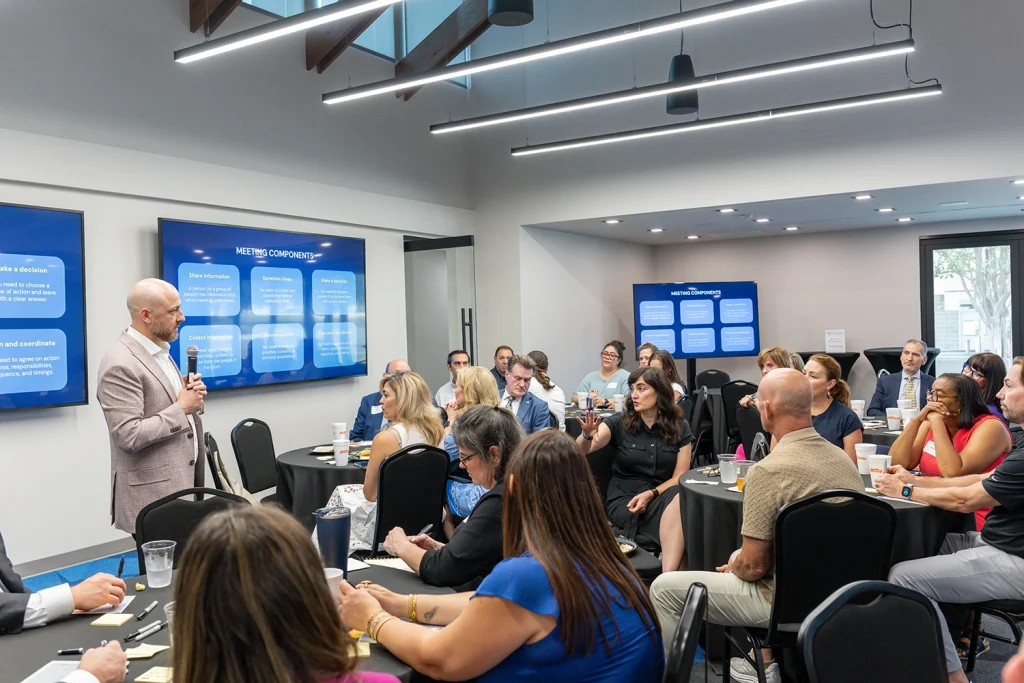
I break the work that happens in meetings into six components:
- Share information
- Collect information
- Narrow options
- Generate ideas
- Make a decision
- Plan and coordinate next steps
Not every meeting needs all six. In fact, most don’t.
But sharing information usually belongs at the beginning. People need the right context before you ask them to contribute. And planning and coordinating next steps belongs at the end. Whatever happens in between needs to move the group from understanding the issue to knowing what happens next.
The middle is where the meeting structure should change depending on what you’re trying to achieve.
Let’s look at those six components more closely.
Share information
Someone has information that other people need to understand. This could be an update, some new data, background on a problem, or context that people need before they can contribute meaningfully.
Collect information
You need input, perspectives, updates or expertise from the people in the room. The important distinction is that you’re collecting what people already know or think. You’re not asking them to create something new.
Narrow options
You already have possibilities on the table, but there are too many of them. The group needs to evaluate, prioritize, combine or eliminate options so you can move closer to a decision.
Generate ideas
Here, you want the opposite. You need the group to create new possibilities before evaluating them. The aim is to expand the pool of ideas rather than immediately decide which ones are good or bad.
Make a decision
At some point, discussion needs to stop and a choice needs to be made. The group needs a clear understanding of what is being decided, how the decision will be made, and what the final answer is.
Plan and coordinate next steps
A productive meeting should finish with clarity. What needs to happen? Who owns it? In what order? And by when? This is where discussion becomes action.
This distinction matters if you’re trying to work out how to improve meetings. Collecting information is different from generating ideas. Generating ideas is different from narrowing them. And narrowing options is different from actually making a decision.
Yet we regularly use exactly the same approach for all of them: we talk.
A better meeting structure recognizes when the group needs to change what it’s doing. That makes it much easier to choose the right exercise, facilitation technique or way of working for each stage, and ultimately to run better, more productive meetings.
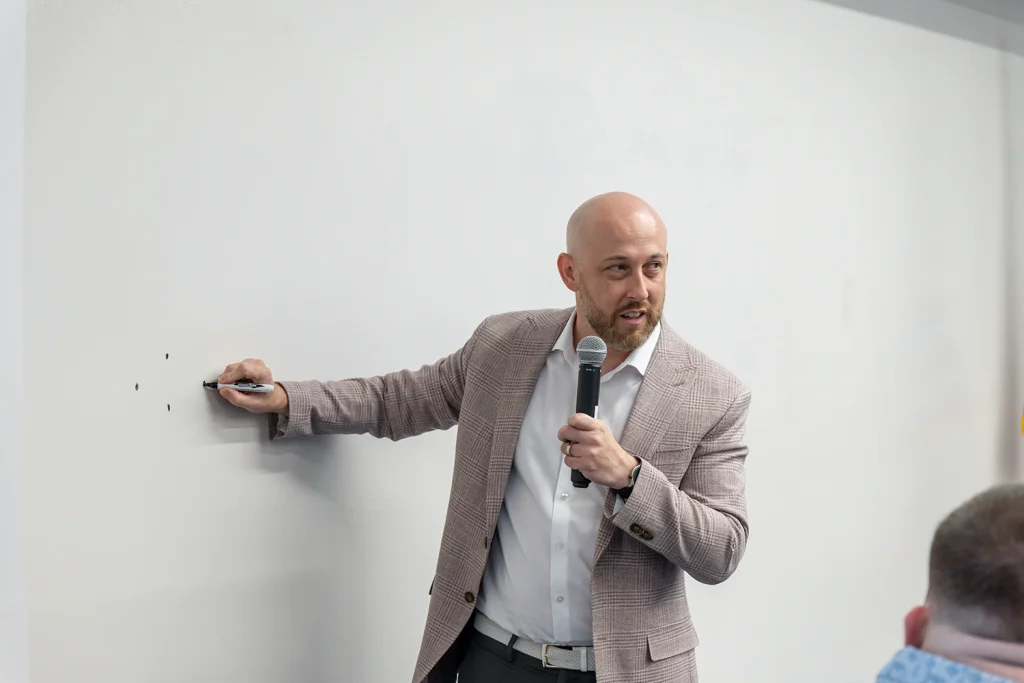
Escaping the Messy Middle: The Four C’s of Better Meetings
Most meetings have a fairly clear beginning. Someone shares information, provides an update, explains a problem or gives the group some context.
We usually know how we want them to end, too. We want clear decisions, actions, responsibilities and next steps.
It’s everything in between that tends to get messy.
The group starts discussing the issue. Someone suggests an idea. Somebody else challenges it. Another person introduces a different problem. The conversation moves in that direction for a while before circling back. New information appears halfway through. Ideas get evaluated before everyone has had a chance to contribute.
There’s plenty of talking, but very little sense of progress.
I often refer to this as the messy middle. A similar stage is described as the “Groan Zone” in the Diamond of Participatory Decision-Making, developed by Sam Kaner with Lenny Lind, Catherine Toldi, Sarah Fisk and Duane Berger. The model describes how groups move from divergent thinking, where different ideas and perspectives emerge, through the Groan Zone, where those differences have to be understood and worked through, and eventually into convergent thinking and a decision.
Read more about the Diamond of Participatory Decision-Making and the Groan Zone
The Groan Zone isn’t necessarily a sign that a meeting has gone wrong. Different perspectives, uncertainty and disagreement can be useful. In fact, Kaner’s model treats this struggle as a normal part of groups developing shared understanding.
The problem comes when the meeting structure gives the group no clear way to work through it.
The Messy Middle! A Common Meeting Structure Issue
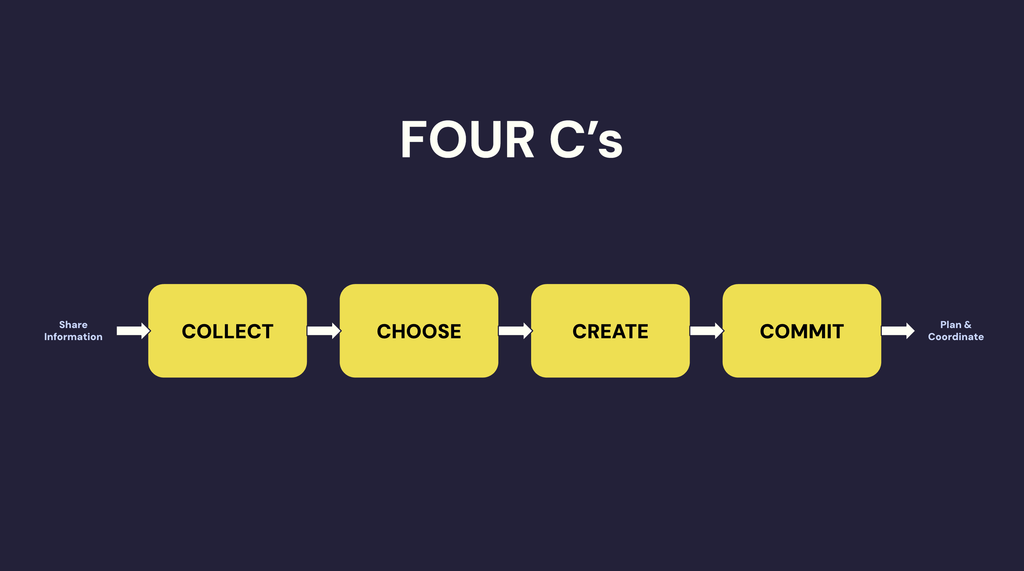
One framework I use to bring more structure to this part of a meeting is the Four C’s: Collect, Choose, Create and Commit.
The Four C’s framework comes from Jonathan Courtney and the team at Berlin-based AJ&Smart. It was developed as a way to structure workshops, but I’ve found the same thinking extremely useful when considering how to improve meetings.
You don’t need to turn every meeting into a workshop. You simply need to be clearer about what you’re asking people to do at each point.
Collect
Gather information, perspectives and challenges from the people in the room. Instead of immediately opening the floor for discussion, think about how you can hear from everyone who has something useful to contribute.
Choose
Narrow the field. Prioritize the issues, options or opportunities that deserve the group’s attention. This is where you stop trying to discuss everything and decide what actually matters.
Create
Generate ideas and potential solutions. At this stage, you want people building possibilities rather than immediately evaluating whether every suggestion will work.
Commit
Turn the group’s thinking into something concrete. Make the decision, agree on the direction and establish what needs to happen next.
The Four C’s don’t need to appear in every meeting; your meeting structure should reflect the outcome you need. But they do a lot of heavy lifting in giving the vast majority of meetings some basic structure.
If you want to run better, more productive meetings, give each part of the conversation a job. Know whether you’re collecting, choosing, creating or committing, and make it clear when the group needs to move from one type of work to the next.
That’s how the messy middle starts to become a much more productive place.
The Dual Role Dilemma
There’s another problem that affects many meetings, particularly those led by founders, executives and team leaders.
The person running the meeting is often also the person with the most to contribute.
As the meeting leader, you’re setting the agenda, providing context, guiding the conversation, managing time, making space for other people to contribute, keeping everyone on track and driving the group toward an outcome.
But you’re also a participant. You have information to share, assumptions to challenge, ideas to contribute and opinions about the decisions being made.
I call this the dual role dilemma.
The Dual Role Dilemma means trying to perform two very different jobs at the same time:
| Run the meeting | Contribute to the meeting |
|---|---|
| Set the agenda | Share your perspective |
| Choose the participants | Add context and information |
| Set the context | Bring your experience |
| Guide the conversation | Challenge assumptions |
| Keep everyone on track | Evaluate what you’ve heard |
| Manage time | Give your opinion on what matters |
| Make space for everyone to contribute | Offer ideas & solutions |
| Move the group through the agenda | Build on other people’s thinking |
| Drive toward an outcome | Help evaluate the final options |
| Capture decisions and actions | Help shape the final decision |
It’s difficult to do both jobs well at the same time. If you’re concentrating on your own contribution, you’re not fully watching what is happening across the group. If you’re focused on facilitating the meeting, you may never give your own thinking the attention it deserves.
For important meetings, consider whether someone else can facilitate all or part of the session. If that isn’t practical, a stronger meeting structure can reduce the amount of active management required. Give people clear activities, clear questions and clear ways to contribute, rather than relying on the meeting leader to steer one continuous conversation.
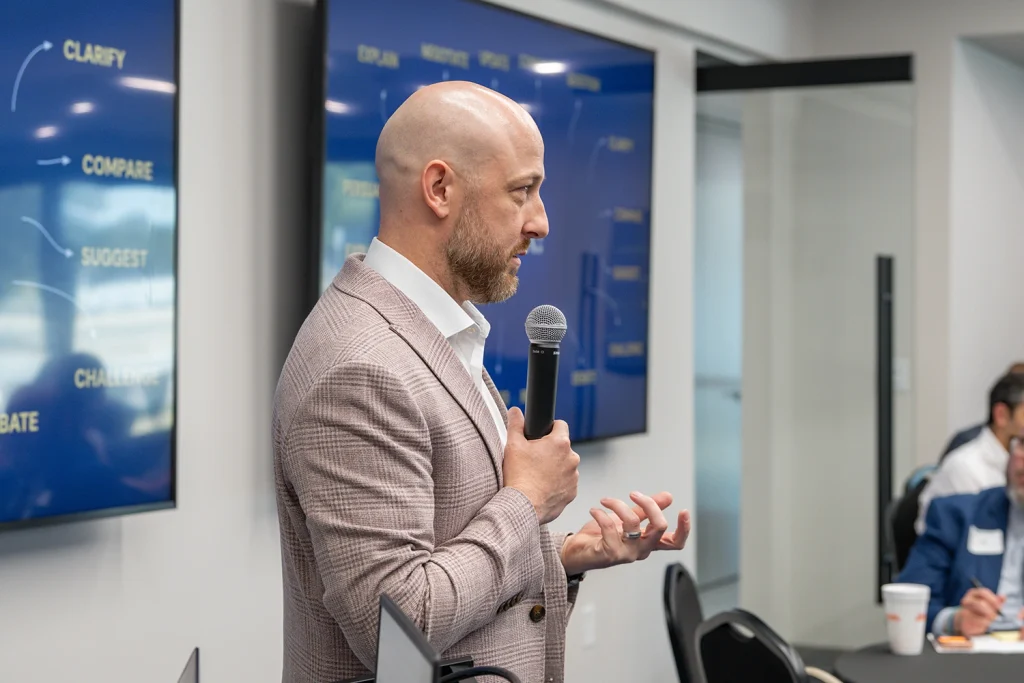
How to Improve Meetings in the future
At the Richardson Chamber workshop, everyone started by choosing one meeting they wanted to improve in the next 30 days. At the end, I brought them back to the same meeting and asked:
Of everything we’ve covered today, what could make the biggest difference to the meeting you chose?
If you’re thinking about how to improve meetings in your own organization, I’d suggest doing the same thing.
Choose one recurring meeting. Be clear about what you actually need the group to accomplish. Identify where you tend to get stuck. Look at whether you need people to Collect, Choose, Create or Commit. Then change the meeting structure accordingly.
You don’t need to redesign every meeting you run. Start with one.
Better meetings often come from a few deliberate changes to how people use the time they already spend together.
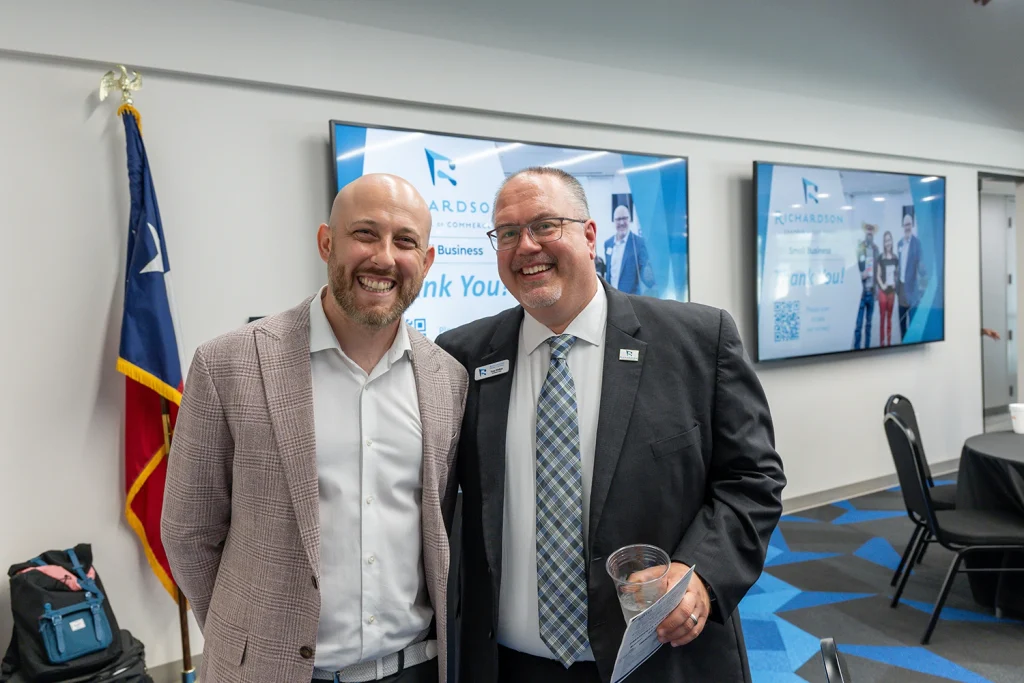
A Great Day With the Richardson Chamber
The September luncheon was also a particularly nice day to deliver this session because it was Tony Moline‘s first day as CEO of the Richardson Chamber of Commerce!
I’ve been heavily involved with the Chamber and the Richardson business community for several years, so it was great to welcome Tony on his first day and see him immediately getting to know some of the people who make this community what it is.
I’m looking forward to seeing what comes next for the Chamber under his leadership.
And for everyone who joined me for the session, I’d leave you with the same challenge we finished with.
Pick one meeting.
Don’t just change what you talk about. Change what you ask people to do.
That’s a good place to start if you want to run better, more productive meetings that actually lead somewhere.